A lovely and haunting song perfect for this rainy afternoon, taken from the Castanets’ 2004 album ‘Cathedral’. I love this entire record, with its creepy and strange melodies, and the almost desperate delivery. Great stuff.
A lovely and haunting song perfect for this rainy afternoon, taken from the Castanets’ 2004 album ‘Cathedral’. I love this entire record, with its creepy and strange melodies, and the almost desperate delivery. Great stuff.
But sort of thinking of picking things back up again. Looking back at this format though, I’m not entirely sure where/what to do with it.
Coming in two parts, sorry people…
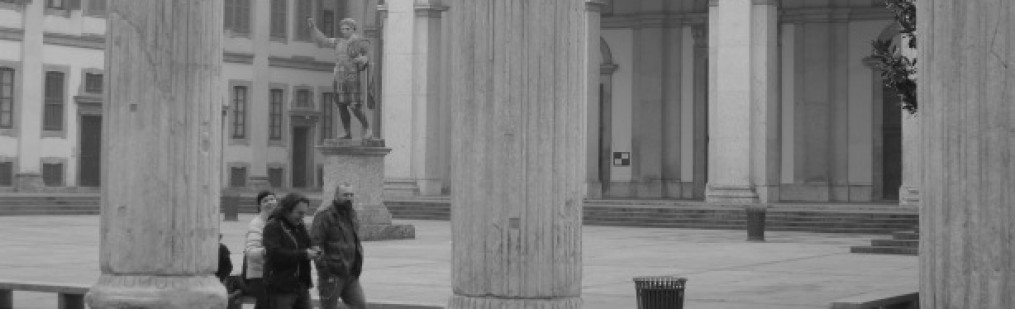
Pics from a recent trip to Milan in northern Italy (also Genoa, coming in the next post). Like many Americans visiting Italy, I’ve often simply passed through Milan — oftentimes missing the city entirely. And I’ll admit that most of the time I didn’t care, what with destinations like Piedmont, Tuscany, Alto Adige or Friuli on the horizon. This time, however, thanks to a long working assignment for a friend, I decided to pay the city a proper visit.
Good times!

Milano has a citywide bicycle rental program where members pick up and park bikes at stations like the one pictured above. And they’re not shy to set up the stations near main points of public interest, in this case, Piazza Duomo.
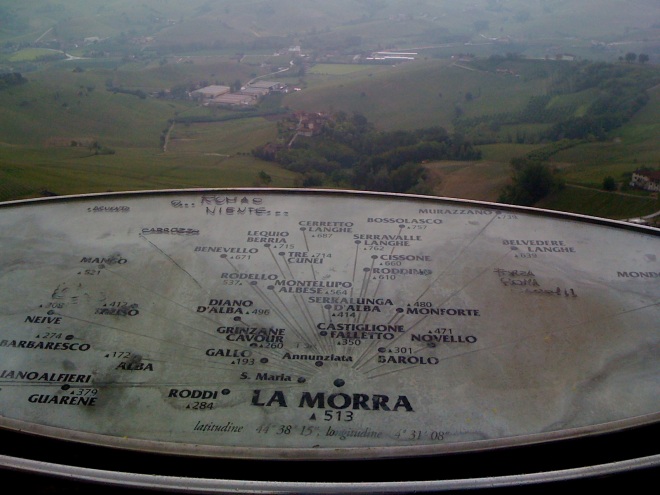
Above: Which way Barolo? A signpost at an overlook in La Morra showing the distance to neighboring communes.
So, do consumers even like Barolo? It’s a sad question to ask if you’re a nebbiolo obsessive, but I think there’s some truth to it. Outside of the wine trade, it seems like most people just don’t respond to nebbiolo the way they do to, say, pinot noir or even sangiovese. Whether that’s a good thing or bad thing for nebbiolo is an open question; but it most certainly has implications for producers in Barolo and Barbaresco.
I recently wrote an article about the current state of Barolo for the San Francisco Chronicle (you can read it here). And while it seems that producers in the region are moving beyond the (frankly tired) debate of traditional vs. modern when it comes to the identity of Barolo, there’s arguably an even bigger step necessary for the nebbiolo heartland: connecting with the people who actually enjoy their wines.
By enjoy, I don’t necessarily mean covet or collect, but rather the appreciation of Barolo (or Barbaresco) for what it is instead of as some sort of trophy. Sadly, the wines won’t ever be cheap but neither should the pricing continue to rise to levels where (most) wines are unattainable.
It’s unlikely that Barolo will ever develop an international high-end market (complete with knock-offs) equivalent to what Bordeaux has going on, and aside from a few rare bottles, Barolo winemakers aren’t anywhere close to the status enjoyed by their counterparts in Burgundy — a frequent comparison.
Happily, two recent trends suggest that there’s bright news for nebbiolo-lovers. First up, the current vintage in the market, 2006, seems to favor producers with a classical bent meaning that what’s in the bottle is an honest representation of the region’s terroir.
And perhaps even better news: after years of lavishing their attention on riserva-level bottlings or numerous single-vineyard ‘cru’ wines, winemakers in the region are turning a serious eye to their blended base wines, those labeled as Barolo, and often sourced from multiple communes. When I joined the Chronicle’s tasting panel for an overview of the 2006 vintage, we found several wines from this category in the $30- $40 range that showed the clarity and depth I love to see in nebbiolo. Good news indeed! You can read the results of that tasting here.

Here at the Spume HQ, we’re passing some rather cold San Francisco nights revisiting, chronologically of course, Matt Groening’s awesome animated series, Futurama. While I was once a strong Simpsons fan — and those first few seasons of the Simpsons are brilliant — Futurama it seems has held up much better over time, both in terms of comic delivery and timeless subject matter.
It’s also an amazing food & wine show it turns out. There’s the spice-weasel bamming chef Elzar (a spin on Emeril Lagasse), and tons of references to cooking, eating and drinking — in a sci-fi futurey animated comedy kind of way. We recently watched the first season episode, A Giant Ball of Garbage, which included this wonderful line from the alcohol loving robot Bender as he orders wine during a banquet:
I’ve been perusing your fortified wine list, and I’ve selected the ’71 Hobo’s Delight, the ’57 Chateau Partay, and the ’66 Thunderschewitz.
Check out the audio clip: Bender ordering wine

(Above: Anderson Valley as seen from Handley Vineyards, spring 2005.)
California’s Anderson Valley has always had a special place in my heart, ever since I first drove through on highway 128 during a road trip from San Diego to northern Vancouver Island in 1996. I make it back to Anderson Valley once every year or so, and each trip is inspiring. From the awesome beauty of the place and the sense of community that exists there, to the wines — among the most honest wines made in California — it’s hard not to say I *Heart* Anderson Valley.
As it turns out, there’s a lot more going on in the local community these days than my short visits have allowed me to witness. Thankfully, the California Report recently posted an excellent radio segment about life in Boonville, the area’s main town. It’s a quick yet fairly thorough look at the region’s current social, economic and environmental situation, and includes a substantial amount of reporting on the local wine industry.
Listen – New Harvest: The Future of Small Town, CA: Boonville & Anderson Valley
(NB: The Boonville segment is the second part of series on the California called “New Harvest: The Future of Small Town, CA”. You can learn more about this promising series, view slideshows and listen to additional broadcasts, at the project’s website.)
Plenty of things in the Anderson Valley broadcast caught my attention, but of note was local David Severn’s mention of regional water issues with regards to the wine industry, such as the affects of grape-growing and vineyard development on the local watershed. This is an important issue throughout California, and certainly well-reported, but I’m glad to see the it raised in this radio piece. It’s something the wine industry should be talking about as often as possible, and in a way that’s completely public and transparent.
(Always did love that Genius + Love = Yo La Tengo compilation.)
There’s a growing number of California winemakers working at the margins of the current industry to produce truly distinctive wines, and some of these fine folks have chosen to work with ribolla gialla, a variety that hails from the northeastern corner of Italy. In fact, it became legal in United States only this year to label varietal wines as ribolla gialla.Exciting!
One recent and (to me) quite successful example is the Arnot-Roberts 2009 Vare Vineyard Napa Valley Ribolla Gialla. Sourced from a tiny nook of a vineyard that industry veteran George Vare planted in the foothills of the Myacamas Mountains on the eastern side of the Napa Valley, it’s both generous in texture and energetic in expression, with a hint of almond and a fruit character that falls somewhere between a Meyer lemon and a tangerine.

Though this really has nothing to do with the Arnot-Roberts Ribolla Gialla — other than I think the band would really dig — in honor of the first day of Hanukkah, here’s a recording of Yo La Tengo performing “Cherry Chapstick” during their annual Hanukkah stand at Maxwell’s in Hoboken, New Jersey.
I’ve got a few posts in the hopper for this site, but for the next couple weeks or so you’ll find me blogging at San Francisco Natural Wine Week, a loosely organized collective tasting bacchanal happening in the would-be Angers-by-the-Bay from August 23-29. Be there or be a lame ass!
Please click here for more information about San Francisco Natural Wine Week, including event information, contact info and various schedules.
The summer has been so cold out here in coastal California that I’ve been hibernating with all the grapes that are going to hit maybe 12.% alcohol this year. Or something like that.
Driving up the coast last week (end of July), Ventura to San Francisco, via my car’s outside temperature display:
Ventura, 10am, 67 degrees (fog)
Santa Barbara, 10.45am, 66 degrees (sun and fog)
Top of San Marcos Pass, 11.15am, 71 degrees (sunny)
Santa Maria Valley, within site of the Bien Nacido vineyard, 12.15pm, 63 degrees (fog, some sun)
Pismo Beach, 12.35pm, 66 degrees (fog)
San Luis Obispo, 12.55pm, 70 degrees (clearing fog, sun)
Paso Robles, 1.30pm, 89 degrees (sun)
San Miguel area, 1.45pm, 91 degrees (sun)
Gonzales (roughly Santa Lucia Highlands, Chalone), 2.35pm, 68 degrees (fog-sun)
Salinas, 3pm, 65 degrees (fog, wind)
Morgan Hill, 4.15pm, 71 degrees (sun, patchy clouds, bullshit traffic)
Cupertino (below Monte Bello), 5pm, 69 degrees (sun, fog to the north)
San Francisco, 5.55pm, 52 degrees (fog, wind, mist)
Summer 2010 on the California coast.

Nebbiolo Prima, the reconstituted annual anteprima event formerly known as the Alba Wines Exhibition, is easily one of the most engaging Italian wine tastings that I’ve attended. It’s also certainly the most gruesome: four days, 75-85 new nebbiolo wines each day, and only three or so hours in a single sitting to taste them all. Still, it’s a fantastic opportunity to taste most of the new releases from the following appellations: Roero, Barbaresco and Barolo. And as an invited (and hosted*) journalist, I got to taste everything blind, broken out by vintage and commune.
I’m still typing up my notes, so it’s a little premature to comment on individual wines. Actually, typed notes or no, I think it’s impossible to offer accurate impressions of the 330 or so wines tasted at Nebbiolo Prima. To be sure, I had some favorites — wines that, to me at least, gave a balanced impression of how nebbiolo performs in a particular zone, whether the Roero, Nieve, or Castiglione Falletto.

Large, comprehensive tastings like Nebbiolo Prima, however, do have their advantages, namely providing an opportunity to play generalist and look for underlying trends or profiles within communes and, most importantly, within the vintage.
So speaking generally, I came away from this tasting uninspired by many of the ’07s from the Roero (a region that I tend to like under normal circumstances) and frustrated by the bulk (literally and figuratively, but not all) of ’07 Barbarescos, especially those from Treiso which, marked as they were by jammy tannins and high alcohols, didn’t seem to handle the warm, dry conditions of 2007.


(Above: Two sides to every tasting, and every rental car. I had rented a new – and adorable – Fiat 500 to make getting around much easier. Unfortunately a tight alleyway and an obscured bench in the medieval town of Serralunga decided to make things a little more difficult. Thankfully, a quick thinking winemaker reattached the bumper with tape.)
Barolo 2006 was a different matter. And at least to judge from my experiences during both Nebbiolo Prima and during visits with several producers both before, during and after the event, 2006 is looking like it will be a very good, possibly classic, vintage for Barolo, especially among producers in Castiglione Falletto, Barolo/Novello, Monforte, Serralunga and Verduno. La Morra was the odd man out here, with too many wines that felt pushed in the cellar, whether through overworked tannins or excessive oak flavors.
Which brings up another point about 2006, and perhaps why I think this vintage shows real promise for Barolo: it’s a tough year to hide behind. In other words, it’s not a year in which warm, ideal ripening conditions can hide bad winemaking, nor is it a year in which the more obviously modern and international styles tended to show their best. If you dig brighter acidity, earthy, firm tannins and purity of expression over technique, then 2006 Barolo is your thing.
A few more posts, including some producer visits in Liguria and Valtellina in addition to Piedmont, to follow…
NB: I had the great pleasure of spending a good amount of time tasting (and eating) with David McDuff, who has also posted informed observations about Nebbiolo Prima. Definitely worth a visit.
*As noted before, but worth pointing out again, I was an invited journalist at Nebbiolo Prima, and have the organizers to thank for logistical support, airfare, some meals, etc. The rental car, in all its taped, bashed-up glory, was my own responsibility.
 spume
spume 